Why supporting the people who care for others must become part of the conversation about mental health.
When we think about teachers, we often think about lesson plans, grading assignments, classroom management, and preparing students for their futures. We recognize the importance of educators in shaping the next generation, but how often do we stop to consider the mental and emotional demands placed on the individuals standing in front of those classrooms every day?
Teaching is often described as a rewarding profession, and it certainly can be. However, behind the meaningful moments and accomplishments are professionals who may be experiencing overwhelming stress, emotional exhaustion, and burnout. Unfortunately, these experiences are not limited to teaching. Healthcare professionals, social workers, counselors, and others in helping professions can also feel the emotional weight of consistently caring for others.
But who takes care of the people who spend so much of their time caring for everyone else?

Burnout Is More Than Just Being Tired
Burnout is often misunderstood as simply feeling tired after a long day or needing a break. However, prolonged workplace stress can have a much deeper impact on an individual's emotional, psychological, and physical well-being.
According to the World Health Organization, burnout is an occupational phenomenon resulting from chronic workplace stress that has not been successfully managed. It is characterized by exhaustion, increased mental distance or negativity toward one's job, and reduced professional effectiveness.
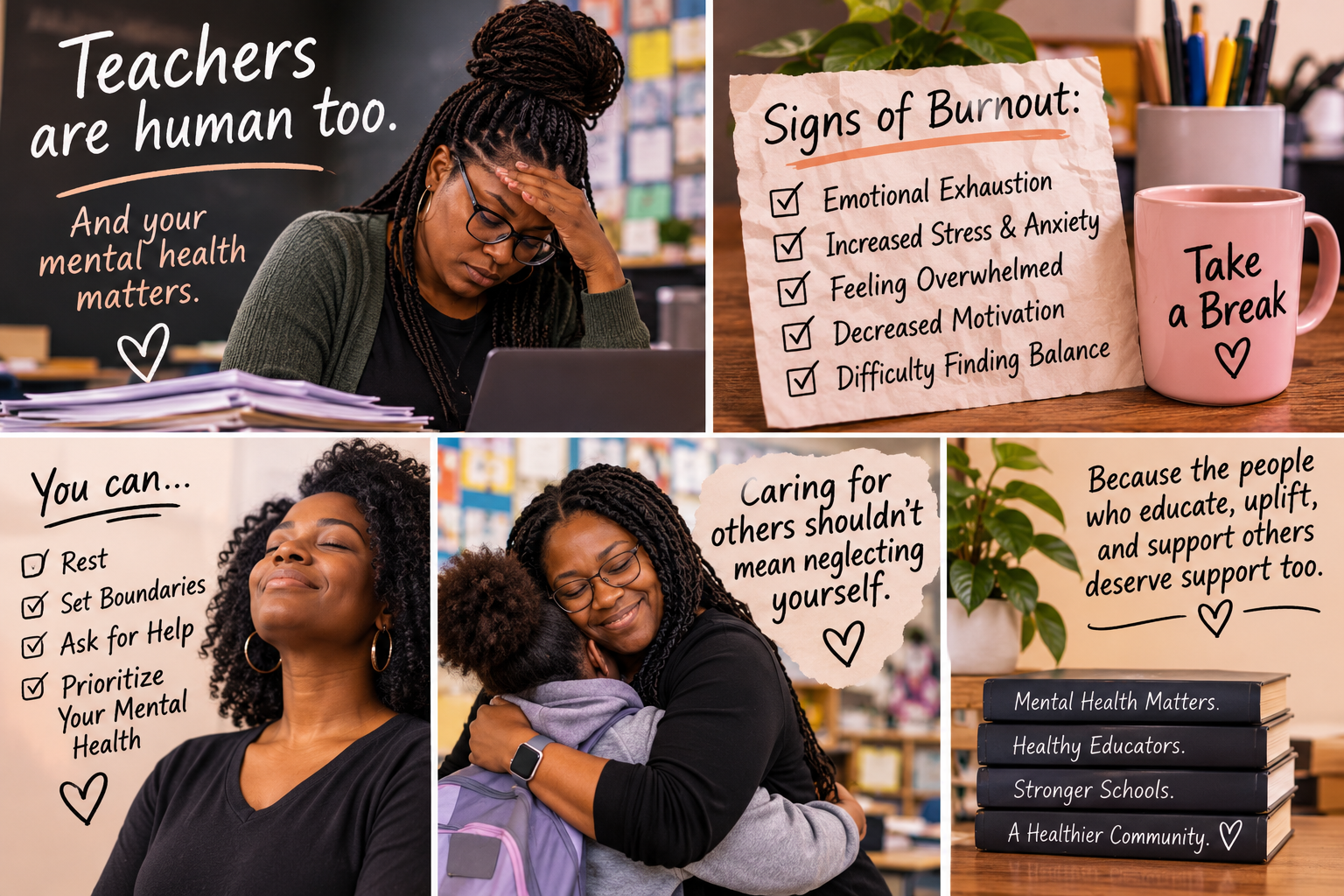
For educators, this may look like feeling emotionally drained before the school day even begins, struggling to find motivation, becoming increasingly overwhelmed by everyday responsibilities, or feeling as though there is never enough time to meet the expectations placed upon them.
These experiences deserve attention, especially when they begin to interfere with an individual's personal life, relationships, and overall mental health.

The Reality of Teacher Burnout
Recent research reflects the challenges educators experience. A 2026 RAND Corporation survey found that 57% of public school teachers reported experiencing burnout, compared with 36% of similar working adults. Additionally, 55% of teachers reported frequent job-related stress, compared with 34% of other working adults.
These findings highlight an important concern: although teaching is an essential profession, the emotional demands associated with it can take a significant toll on the individuals who dedicate their lives to educating others.
Burnout does not necessarily mean someone dislikes their career or has lost their passion. Sometimes, it means that the demands of the profession have become greater than the resources, support, and time available to manage them.
Teachers can be passionate about their students and still feel overwhelmed. They can love what they do and still struggle with their mental health. Both experiences can exist at the same time.
When Caring for Others Comes at the Expense of Yourself
One of the challenges associated with helping professions is the expectation to consistently show up for others, even when personal needs are going unmet.
Teachers may spend their days supporting students academically, emotionally, and socially while managing classroom expectations, administrative responsibilities, and pressures outside of work. By the time they return home, there may be little energy left to devote to themselves.
Over time, this pattern can contribute to increased anxiety, irritability, emotional exhaustion, difficulty sleeping, and feelings of hopelessness or disconnection.
It is important to recognize that experiencing these challenges does not mean someone is incapable of doing their job. It means they are human.
We often encourage individuals to prioritize their mental health, but that encouragement must extend to the professionals who may feel they cannot afford to slow down.
Mental Health Support Should Be Part of the Conversation
From a counseling perspective, creating awareness around occupational burnout is an important step toward recognizing the connection between workplace experiences and mental health.
Counseling can provide individuals with a space to process work-related stress, explore emotional responses, identify coping strategies, establish healthier boundaries, and reconnect with their personal needs.
For someone experiencing burnout, seeking counseling does not have to mean waiting until they reach a breaking point. Mental health support can also be preventative, helping individuals recognize signs of emotional exhaustion before those experiences become more overwhelming.
However, the responsibility for addressing burnout should not fall entirely on the individual.
Encouraging teachers to practice self-care is important, but self-care cannot replace adequate staffing, reasonable workloads, supportive leadership, appropriate compensation, and healthy workplace environments. Organizations must also recognize their role in creating conditions that support employee well-being.
A Reminder That You Matter, Too
If you work in a profession where you spend much of your time caring for, teaching, or supporting others, consider this your reminder that your well-being matters, too.
You are allowed to rest. You are allowed to establish boundaries. You are allowed to ask for help. You are allowed to acknowledge that something has become emotionally overwhelming without feeling guilty about it.
Your profession may be an important part of your identity, but it does not define your entire identity.
As we continue conversations about mental health awareness, we must remember to include the individuals who are often expected to be the strongest, most dependable, and most supportive people in the room.
Because the people who dedicate their lives to helping others deserve support, too.
If you have been struggling with work-related stress or emotional exhaustion, consider reaching out to a mental health professional to explore the support and resources available to you. You do not have to wait until you are burned out to prioritize your mental health.